


The PCEA Kimanjo Child Development Centre in Laikipia County recently organized a powerful anti-FGM campaign through an Alternative Rite of Passage (ARP) program aimed at protecting girls from Female Genital Mutilation (FGM) while preserving positive cultural values. The initiative brought together government officials, community leaders, development partners, caregivers, and young girls to promote safe and dignified transitions into adulthood without harmful practices. The event attracted key stakeholders, including the CEO of the Anti-FGM Board of Kenya, representatives from the Member of Parliament’s office, the County Commissioner, the Assistant County Commissioner, local chiefs, and partners such as Action for Children Kenya and Mukogodo Amazing Girls. Their presence showed a united commitment by government and community actors to end FGM and protect girls’ rights.
As part of the program, 300 girls aged nine and above participated in a three-day mentorship and training at PCEA Kimanjo. The sessions provided the girls with knowledge and life skills to help them transition into adulthood safely and confidently. Facilitators guided them through topics such as adolescent growth and development, menstrual health and hygiene, personal hygiene and sanitation, healthy relationships, and the prevention of sexually transmitted infections, including HIV/AIDS.</p.
The training also created an open platform for discussing the risks of FGM. Participants learned about the serious physical and emotional effects of the practice, including heavy bleeding, infections, complications during childbirth, and long-term trauma. Facilitators emphasized that FGM is harmful, illegal, and not required by any religion, encouraging families to choose safer cultural alternatives that celebrate girls without causing harm.
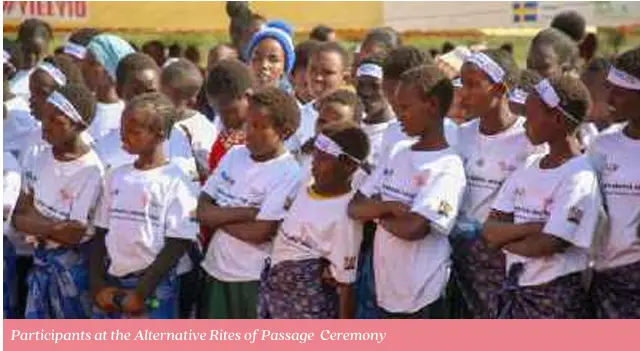
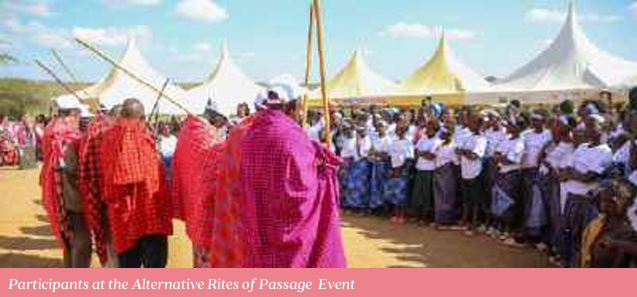
Parents, caregivers, and local leaders openly supported a zero-tolerance approach to the practice and suggested conducting the Alternative Rite of Passage twice a year to reach more girls. Participants also agreed to establish community committees to collaborate with local authorities in preventing FGM, early marriage, and other harmful practices.
The Alternative Rite of Passage showed that cultural traditions can change in ways that protect the dignity, health, and future of girls. Through mentorship, education, and community dialogue, the program enhanced collaboration among the church, government agencies, partners, and the broader community. It fostered renewed hope for a future in which girls in Laikipia County grow up safe, educated, and empowered to pursue their dreams without fear of harmful practices.
