


At Compassion, we believe that young people can overcome poverty if they are provided with the right skills, tools, and opportunities. Our collaboration with Pawatech Solutions is actively making this belief a reality, showcasing how technology, innovation, and teamwork can change lives. Through the Digital Freelancing Program, over 430 youth aged 18–35 have received training in valuable digital skills, including AI-driven graphic design, content creation, virtual assistance, digital marketing, and web development. The results are impressive: a 98% completion rate across cohorts, with all graduates earning an income within two months, and a collective income exceeding KES 7 million (about USD 54,000) in freelance income, averaging around KES 16,000 (USD 120) per participant. Eric Mugo, one graduate, summarized it: “Online work isn’t just work, it is a game-changer.”
To enhance sustainability, Pawatech has instructed over 600 children (ages 8–14) in coding and robotics, creating Robotics Clubs in Marsabit, Baringo, and Embu. These active clubs foster creativity, problem-solving, and innovation, laying the groundwork for Kenya’s upcoming digital leaders. Acknowledging the importance of access, Pawatech collaborated with manufacturers to provide over 550 laptops at reduced prices, enabling learners to gain digital skills and continue earning and innovating beyond training. In addition to training, it offers mentorship, job opportunities, and plans for expansion across Kenya.
Pawatech and Compassion aim to reach 15,000 youth and underserved individuals in five years, growing robotics programs nationwide and establishing digital hubs in rural and marginalized communities. Compassion International Kenya and Pawatech Solutions recently signed a Memorandum of Understanding (MOU), underscoring their shared commitment to creating sustainable, self-reliant futures for children and young people. These efforts directly support Compassion’s goal of fostering self-sufficiency among young people by helping them gain dignified livelihoods, build resilience, and positively impact their families and communities.

More Blogs
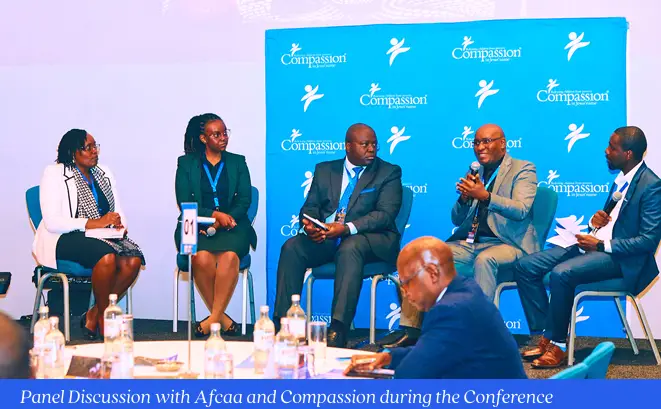
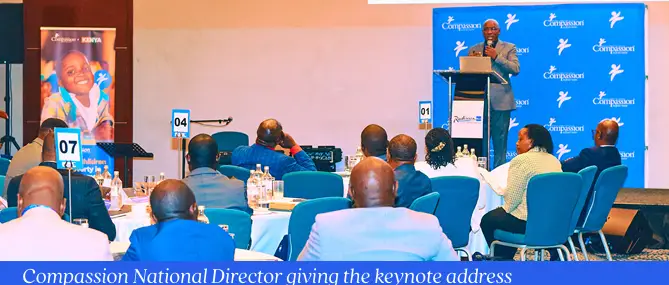
The 2026 National Church Leaders Conference brought together church leaders, Compassion International Kenya leadership, and accountability partners for a day of reflection, learning, and renewed commitment to strengthening ministry to children, youth, and families. Held under the theme “Influencing Positive Change Through Collective Action,” and guided by Genesis 41:38, the conference created space for church leaders to reflect on their shared calling to lead with wisdom, integrity, and the Spirit of God.
The conference was attended by 47 National Church Leaders, representing 497 churches in partnership with Compassion International. The gathering highlighted the power of the local church as a trusted, community-rooted institution that continues to play a central role in nurturing, protecting, discipling, and empowering children and youth. Dr. Oliver Kisaka delivered the devotional message and encouraged leaders, drawing on Acts 11:19–30. He reminded them that a church transformed by the Word of God becomes united, generous, and mission-driven, moving beyond self-focus to impact others through faith and compassion



Following the presentations, church leaders took part in question-and answer and plenary sessions, leading to the conference participants’ key resolutions:
- Conduct comprehensive compliance audits in governance, employment, child protection, data protection, property, financial management, and procurement to support the resolutions that follow.
- Strengthen governance and accountability by reviewing church registration status, clarifying leadership structures,formalizing board meetings, improving reporting lines, and safeguarding church property.
- Enhance tax compliance by reviewing tax-exemption status, filing annual returns, remitting statutory deductions, tracking surplus funds, and maintaining audit-ready records.
- Improve financial management and internal controls through stronger budgeting, procurement, reporting, approval processes, monthly financial reviews, and annual audits as part of the overall compliance response.
- Prioritize child protection and safeguarding by developing or strengthening relevant policies, establishing incident-reporting procedures, and enforcing codes of conduct to reinforce safe church practice.
- Improve data protection by establishing clear procedures, registering or renewing registration with the Office of the Data Protection Commissioner, securing sensitive information, and enforcing access controls to strengthen responsible information handling.
- Build a strong culture of compliance through regular awareness programs, leadership training, quarterly compliance reviews, annual evaluations, expert support, and independent audits to sustain these measures.
- Plan to align church operations with the African Council for Accreditation and Accountability’s standards and accreditation pathway through assessment, advisory support, and continuous improvement to ensure ongoing progress.
Beyond governance, the conference called churches to expand their commitment to children and youth programming. In his closing remarks, Newton Midamba, Senior Manager of Partnership, encouraged leaders to carry the day’s commitments back to their churches and denominational structures. The conference closed with prayers led by Bishop Shadrack Oloo, marking the end of a significant day of reflection, accountability, and renewed partnership.